
Dental anxiety affects roughly 15% of adults globally, and traditional impressions make it worse. At Blue Diamond Dental in Inglewood, the iTero intraoral scanner eliminates messy molds with a fast, comfortable 3D scan, while sedation options—nitrous oxide, oral sedation, and IV sedation—are tailored to each patient’s anxiety level so no one has to white-knuckle their way through an appointment.
Dental visits come with a reputation that most people would rather not think about. The tray full of gooey impression material, the gagging, the waiting while it sets. These experiences are exactly why so many patients put off care until a small problem turns into something that requires a much longer appointment.
That reputation, however, doesn’t have to be your reality. At Blue Diamond Dental, we’ve invested in tools and techniques that address discomfort head-on. The two most impactful for anxious patients are our iTero intraoral scanner and our sedation dentistry options. Together, they change what a dental appointment feels like from the moment you sit in the chair.
Key Takeaways
- Dental anxiety affects approximately 15% of adults globally and leads many to delay or avoid necessary care entirely.
- The iTero scanner replaces uncomfortable traditional impressions with a quick, non-invasive 3D digital scan—no trays, no material, no gag reflex.
- Clinics using iTero scanners save patients 23–33 minutes of chair time compared to traditional impression methods.
- Blue Diamond Dental offers three levels of sedation—nitrous oxide, oral conscious sedation, and IV sedation—each suited to different patient needs and anxiety levels.
- Sedation and iTero scanning can be used together for a smoother, more comfortable overall experience.

Why Dental Discomfort and Anxiety Are More Common Than People Admit
According to a 2025 study published in BMJ Open, dental anxiety affects approximately 15.3% of adults globally. Research published by Cardiff University found that more than one in seven people in Western countries actively avoid dental care because of fear. That’s not occasional nervousness—that’s a pattern that leads to real health consequences over time.
Much of this anxiety doesn’t come from nowhere. Traditional dental impressions are a common source. The tray is placed in your mouth, you’re told not to swallow, and you wait for the material to harden—sometimes triggering a gag reflex, sometimes causing genuine distress. For patients who already feel uneasy in the dental chair, this experience can make the next appointment feel even harder to schedule.
The avoidance cycle that follows is well-documented. A patient skips an appointment, a minor issue progresses, and by the time they return, more extensive treatment is needed. We see this often at our Inglewood, California practice, and it’s a big part of why we’ve built our workflow around reducing those friction points before they become barriers.
How the iTero Scanner Creates a Completely Different Experience
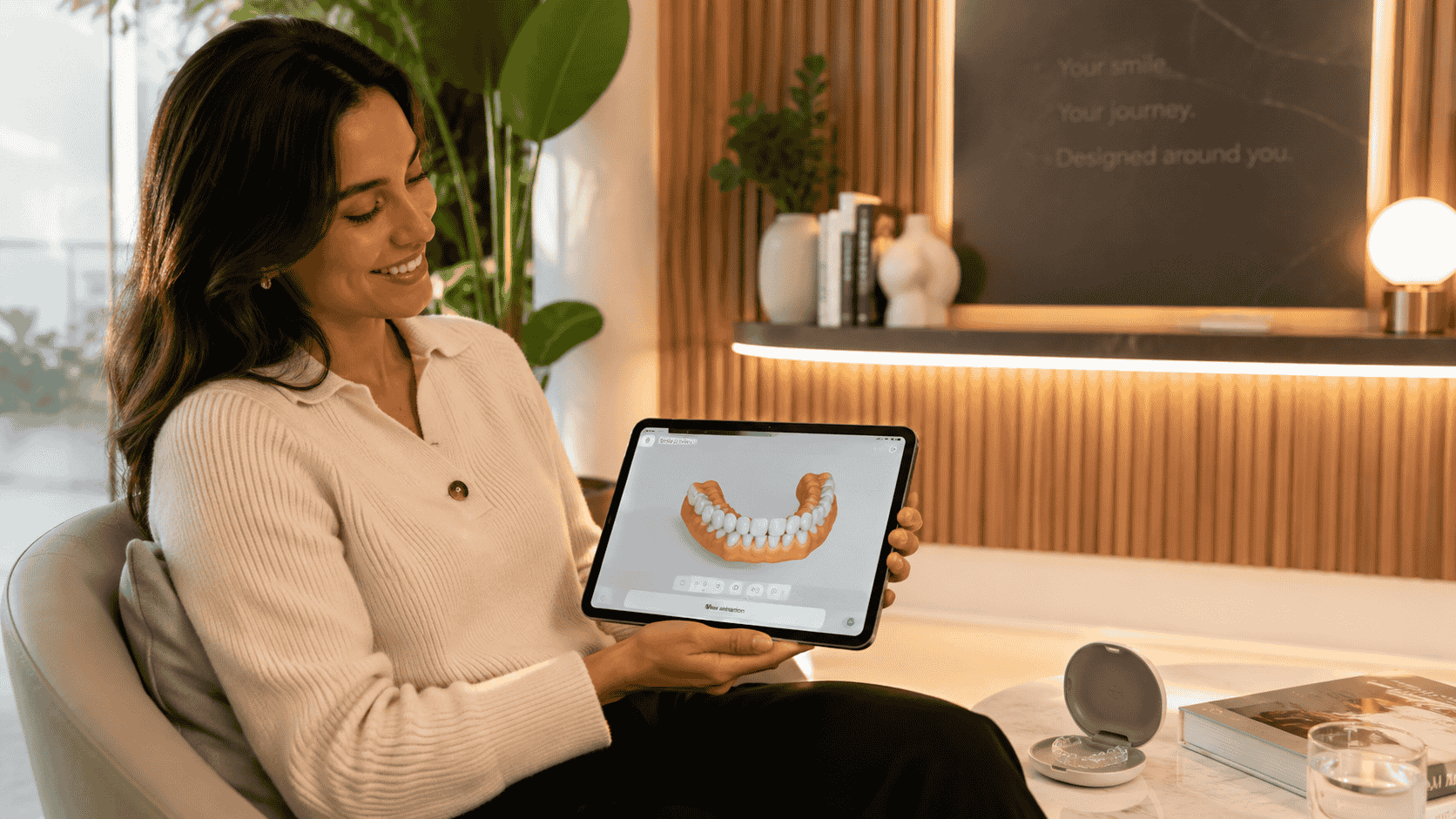
The iTero intraoral scanner is a handheld wand that captures thousands of images per second using a low-power laser or LED light. Those images are instantly assembled into a detailed, high-resolution 3D model of your teeth and gums—right on screen, in real time. There are no trays, no impression material, and nothing to hold in your mouth while it sets.
For patients who struggle with the gag reflex, this alone is a significant difference. The wand moves smoothly around the mouth, and because you’re watching the scan build live on the monitor, there’s a transparency to the process that most patients find reassuring. You can actually see what we see.
From a clinical standpoint, the accuracy is measurably better than traditional methods. That precision matters for treatments like crowns, bridges, veneers, and Invisalign, where even minor inaccuracies in impressions can affect fit and outcome. Research cited in dental literature shows that practices using iTero scanners save patients 23 to 33 minutes of chair time per appointment compared to conventional impression methods. Faster, more accurate, and far more comfortable—the iTero scanner addresses all three at once.
For a closer look at our technology, including everything available at our Inglewood location, that page lays it out clearly.
Sedation Options at Blue Diamond Dental: Finding What Works for You
The iTero scanner handles imaging with a lot less stress, but for patients with moderate to severe dental anxiety, imaging is only one part of the picture. Sedation dentistry addresses the procedural side—helping patients stay calm, comfortable, and able to receive the care they need without bracing through every step.
At Blue Diamond Dental, Dr. Anthony Ortega is board-certified to administer oral conscious sedation, and we offer three main levels of sedation based on your anxiety level, the length of the procedure, and your overall health.
Nitrous Oxide
Nitrous oxide, sometimes called laughing gas, is inhaled through a small mask placed over the nose. According to the Cleveland Clinic, patients typically start feeling calm and relaxed within three to five minutes of breathing it in. The dosage is adjustable throughout the procedure, so we can fine-tune the effect as needed.
Once the procedure is complete, we administer pure oxygen to flush it out of your system. Most patients recover within 15 to 30 minutes and can drive themselves home afterward. Nitrous oxide is a good fit for mild to moderate anxiety and shorter procedures.
Oral Conscious Sedation
Oral conscious sedation involves a prescription medication taken about an hour before your appointment. Common options include triazolam (Halcion) or similar medications. The effect is stronger than nitrous oxide—some patients feel drowsy enough to drift off during the procedure, which isn’t a problem.
If we need you to reposition or open wider, we’ll gently prompt you. Because the sedative stays in your system longer, you’ll need someone to drive you home, and recovery takes up to 24 hours. This level is suited for patients who need something stronger than nitrous oxide but don’t require IV-level sedation.
IV Sedation
IV sedation is the deepest form of conscious sedation available in a dental office setting. Medication is delivered directly into the bloodstream through an IV line, with continuous monitoring of your heart rate and blood pressure throughout the procedure. Most patients have no memory of the appointment afterward.
This option is typically recommended for patients with significant dental anxiety or those undergoing more involved procedures. As with oral sedation, you’ll need a ride home and should plan to rest for the remainder of the day.
The right choice depends on your specific situation. At your first appointment, we take the time to talk through your concerns, medical history, and what we’re treating before making any recommendations.
Why We Take a Comfort-First Approach at Our Inglewood Practice
Every member of our team has a role in making appointments feel different. Dr. Elom Kwame, one of our dentists at Blue Diamond Dental, holds a degree in psychology in addition to his dental training, and has dedicated his career specifically to treating dental anxiety and PTSD in patients. That background shapes how he communicates, prepares patients before procedures, and responds when someone is feeling overwhelmed.
Our approach isn’t about rushing through appointments—it’s about making sure each patient leaves feeling better than when they walked in, both in terms of oral health and overall experience. You can read about the results directly on our patient reviews page.
If you’re near Inglewood or anywhere in the South Bay area, we’re located at 3516 W Imperial Hwy. We serve patients from Hawthorne, Manhattan Beach, Gardena, El Segundo, and surrounding communities.

FAQ
Q: Is the iTero scanner safe?
A: Yes. The iTero scanner uses a low-power laser or LED light to capture images and emits no radiation. It’s non-invasive, approved for use in dental practices, and suitable for patients of all ages.
Q: Do I need sedation if I’m getting an iTero scan?
A: Not necessarily. The iTero scan itself is very comfortable—most patients tolerate it easily without any sedation. Sedation is typically used for the dental procedure that follows, not the scan. That said, if you have significant anxiety about being in the dental chair at all, we can discuss what options make sense for your specific situation.
Q: How long does an iTero scan take?
A: A full iTero scan typically takes just a few minutes to complete. Because there’s no impression material to set and no waiting involved, the process is noticeably faster than traditional methods.
Q: What’s the difference between nitrous oxide and oral sedation?
A: Nitrous oxide takes effect quickly, wears off within 15 to 30 minutes, and lets you drive home after your appointment. Oral conscious sedation produces a deeper level of relaxation, lasts several hours, and requires someone to drive you home. The right choice depends on your anxiety level, the procedure being done, and your health history—something we’ll work through together before your appointment.
Q: Can I combine the iTero scanner with sedation at the same visit?
A: Yes. If you’re receiving a procedure that involves both scanning and treatment, we can incorporate sedation into the same appointment. We’ll walk you through what to expect and how to prepare.
Ready for an Appointment That Doesn’t Feel Like What You’re Expecting?
Dental anxiety is real, and traditional impressions genuinely are uncomfortable. Both of those things are worth taking seriously. The combination of the iTero intraoral scanner and individualized sedation options means that most of the experiences patients dread most are no longer a given.
If you’ve been delaying care because you’re not sure how you’ll handle the appointment, that conversation starts with us. Reach out to Blue Diamond Dental to schedule a consultation, and we’ll figure out the right approach together. As your family dentist in Inglewood, we’re here to make sure every visit—from the first scan to the final step—works for you.